Sunday, 20 September 2026 | Updating Daily AI insight, written for builders

Author name: Mustafa Ihsan

Mustafa Ihsan is the founder and editor of Convly.ai. He built and maintains the site's live AI models database, its price-performance index, and its free calculators for VRAM requirements, API costs and self-hosting economics. He writes about model pricing, benchmark results and the hardware needed to run AI models locally, and consistently prefers measured numbers to vendor claims.

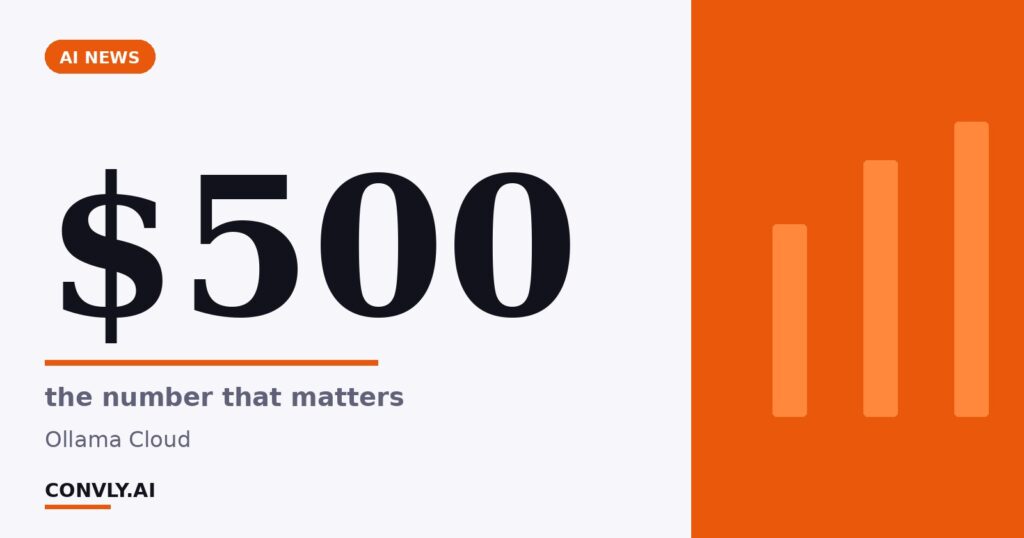
$500 — the number that matters. Ollama Cloud.
Tutoriales

Ollama Cloud: Ejecución de modelos en la nube frente a ejecución local

TL;DROllama Cloud refers to running Ollama on cloud infrastructure (AWS, GCP, Azure) rather than local hardware—same CLI and API, remote execution. All models in the Ollama library work on cloud instances; you pay hourly for GPU compute instead of buying hardware. Break-even point varies by usage: the self-hosting vs API calculator shows when cloud GPUs beat local hardware purchases. Privacy trade-off: cloud hosting means your prompts and responses transit the network and touch provider infrastructure, unlike fully local inference. Ollama cloud deployments run the same Ollama server you’d install locally, but on rented GPU instances from AWS, Google Cloud, Azure, or other providers.
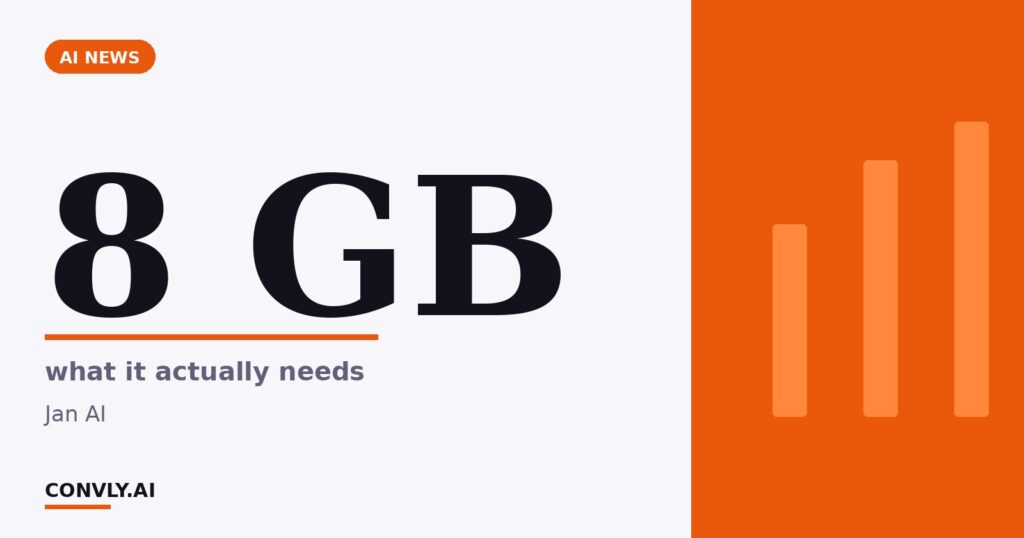
8 GB — what it actually needs. Jan AI.
Tutoriales

Jan AI: Aplicación de escritorio de código abierto para ejecutar LLM de forma local

Jan is a free, open-source desktop app (AGPL license) that runs LLMs entirely on your own hardware — no account, no cloud, no data leaving your machine. It ships a chat interface, a model hub for downloading GGUF models, and an OpenAI-compatible local API server (default port 1337).Download from jan.ai or the GitHub Releases page — builds for Windows, macOS (Apple Silicon and Intel), and Linux. Best for privacy-focused users who want a full GUI experience; developers wanting a headless API-first workflow may prefer Ollama instead.

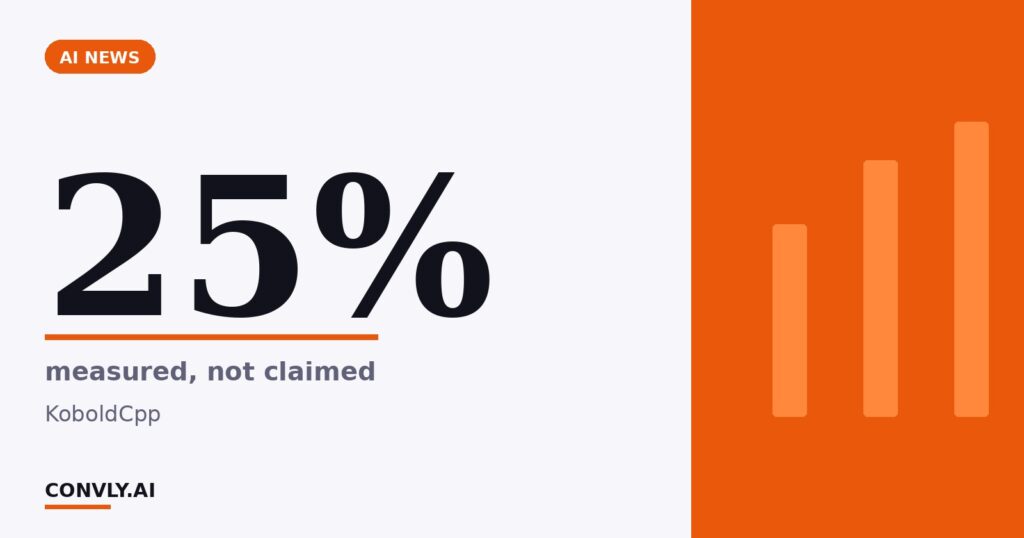
25% — measured, not claimed. KoboldCpp.
Tutoriales

KoboldCpp: Guía completa del entorno de ejecución local de LLM en un solo binario

KoboldCpp is a single executable — download it, point it at a GGUF model file, and a browser UI plus OpenAI-compatible API start immediately on port 5001. GPU offload is controlled by –gpulayers N; start with 999 to try full offload and reduce if you hit out-of-memory errors. Use it when you want a built-in story/chat UI or need KoboldAI-compatible endpoints; use Ollama if you prefer a managed model library and CLI-first workflow. No install step, no package manager, no daemon — just a single binary and a GGUF file. KoboldCpp is a single-file local LLM runtime built on top of llama.cpp.

SGLang vs — explained. SGLang vs vLLM.
Comparaciones de IA

SGLang frente a vLLM: ¿qué motor de servicio de LLM elegir en 2026?

vLLM is the safer default: broadest model and hardware support, biggest ecosystem, least deployment friction. Pick SGLang when your traffic reuses prompt prefixes heavily (agents, multi-turn chat, big system prompts) or produces lots of structured JSON output — RadixAttention and jump-forward decoding win there. The performance gap is workload-dependent and shrinks with every release.

Scroll to Top